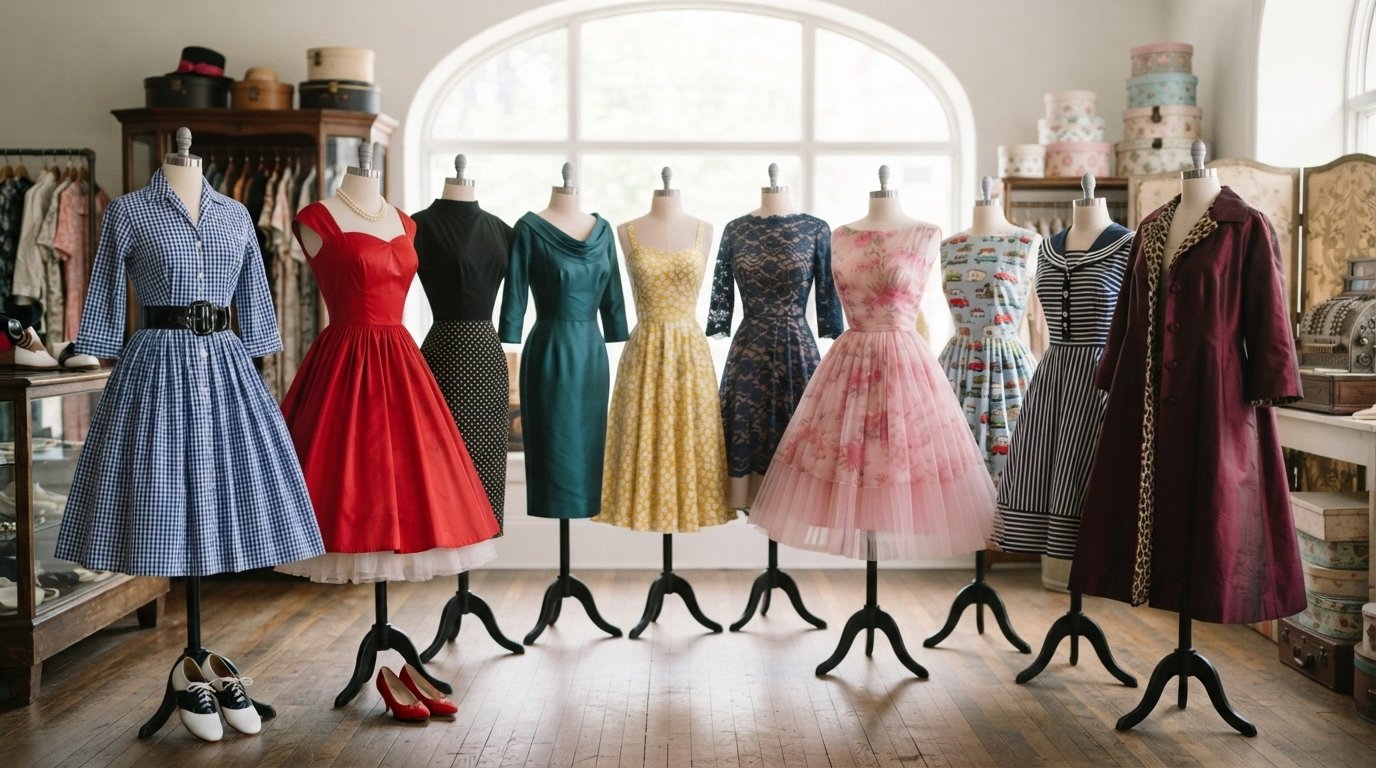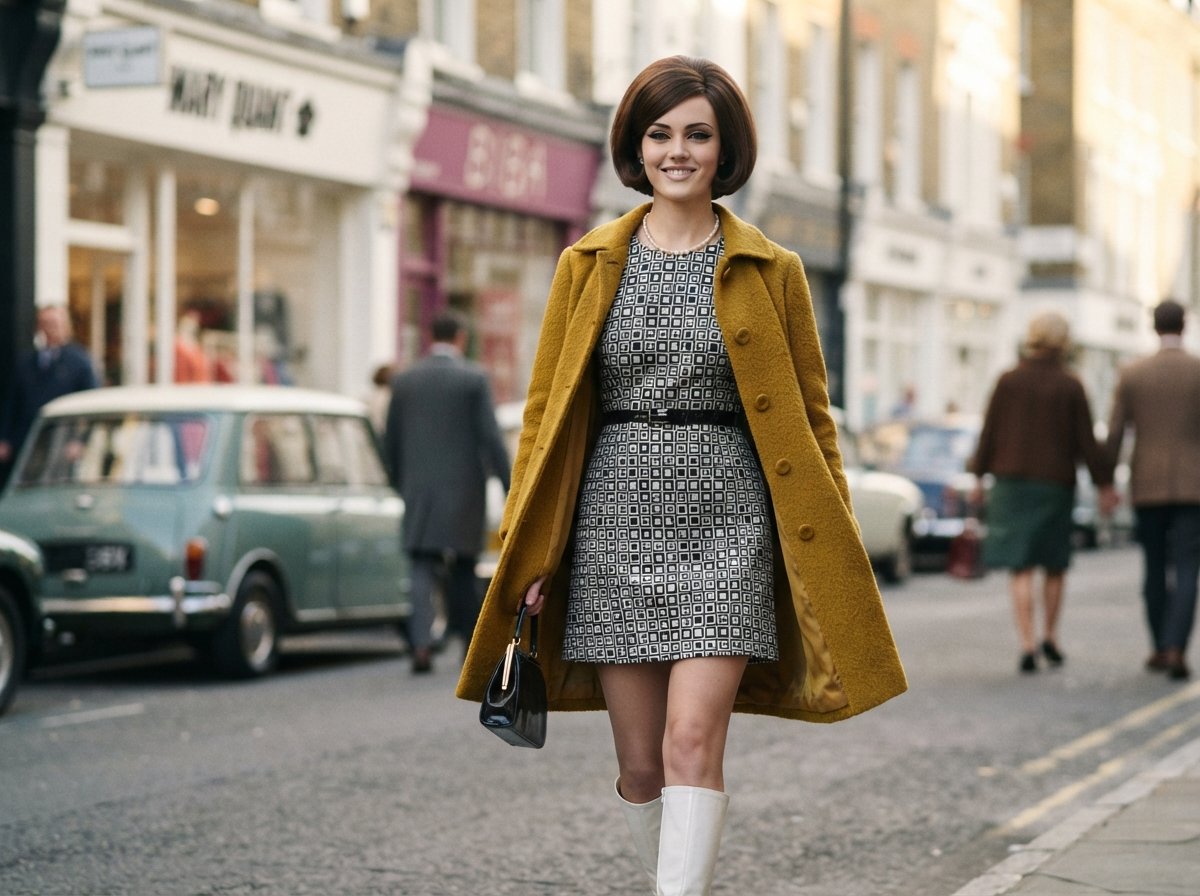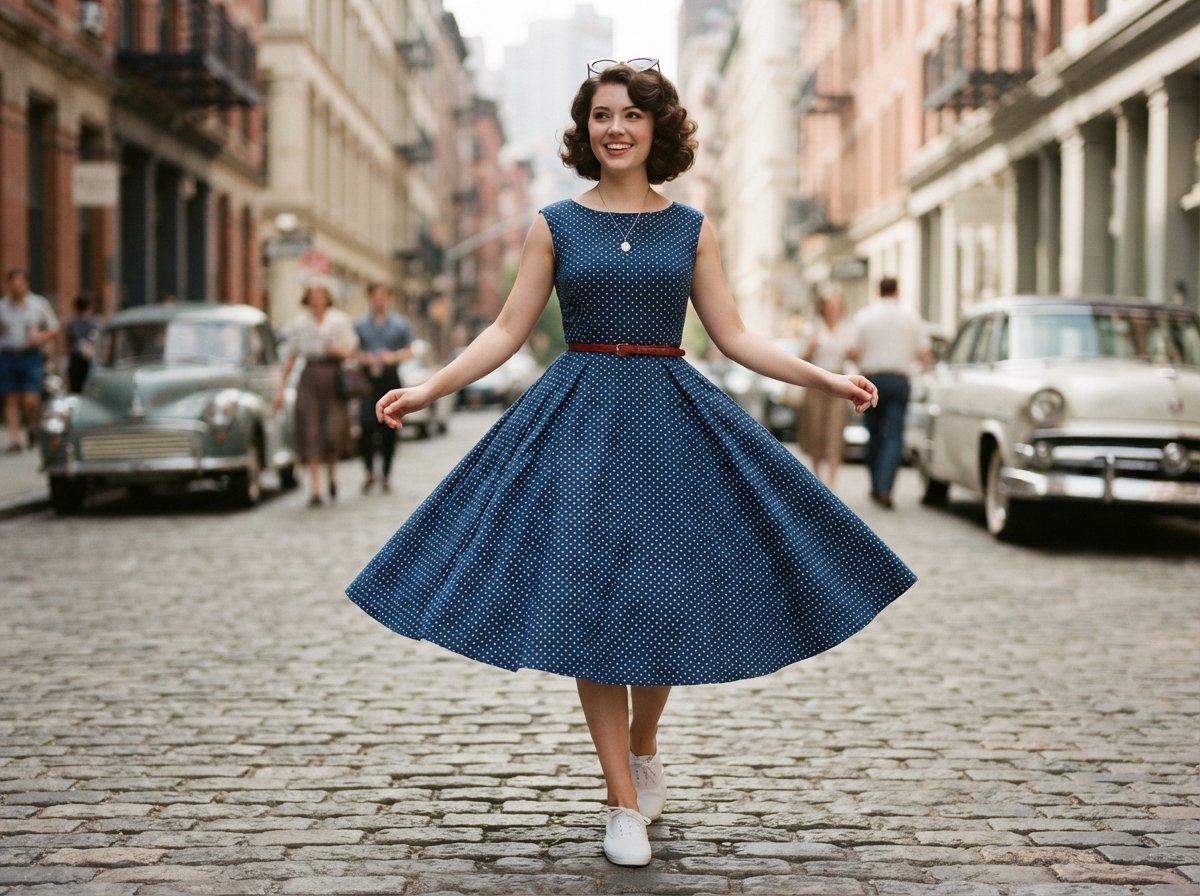
Updated for 2026 | Last Updated: September 28, 2026 | Fact-checked by: Zapy Beauty Editorial Board | Disclosure: No affiliate links
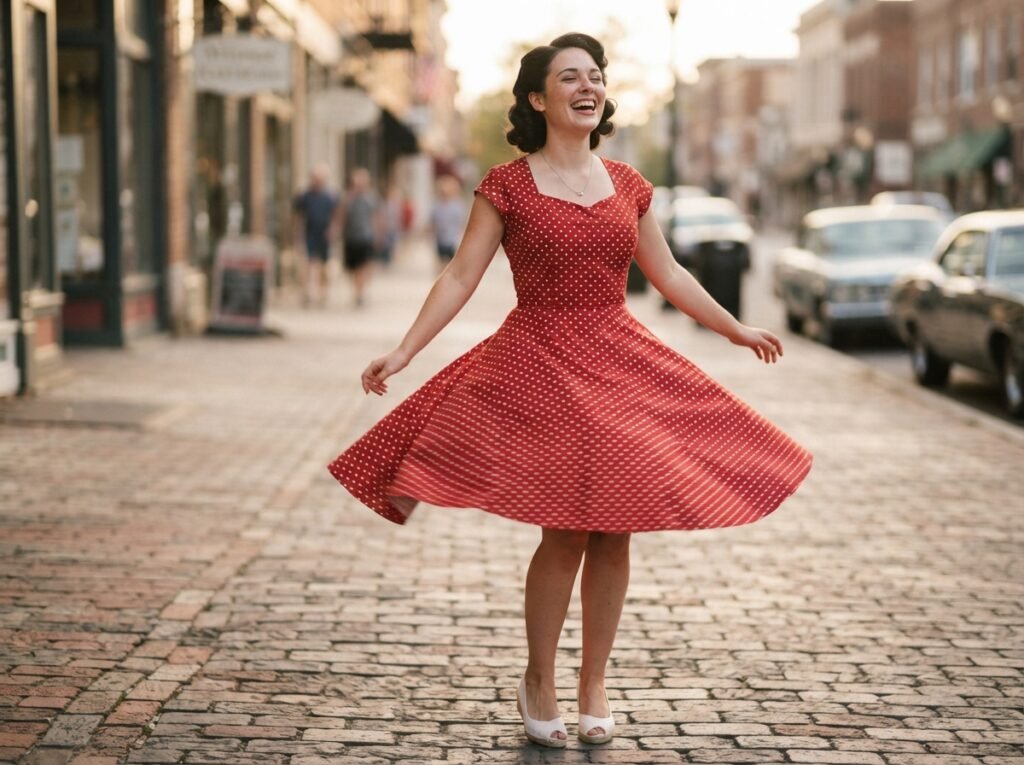
Here’s a number that surprised me. The average American woman wears a size 16 to 18 (Christel and Dunn, 2016). Yet most vintage-style shopping guides still talk as if everyone fits a sample size. That gap is exactly why so many people buy a swing dress, love it online, and return it two weeks later.
A swing dress is easy to love and surprisingly easy to get wrong. The bodice is too tight, the skirt collapses, or the hem lands at the worst spot on your leg. Sound familiar?
This guide fixes that. You’ll get the history in plain English, the real difference between silhouettes, and a fit method you can test at home.
Key Takeaways
- A swing dress is defined by a fitted bodice and a flared skirt, and the skirt cut decides how it looks.
- Circle skirt and full skirt dresses are not the same thing.
- Bodice fit matters more than skirt volume.
- Plus size swing dresses work best with structured seams and the right neckline.
- A petticoat can change the silhouette more than the dress itself.
- You can style one dress three ways for work, dinner, and weekends.
Ready? Let’s start with the basics.
Table of Contents
- What Is a Swing Dress? The 1950s Story (Updated for 2026)
- Swing Dress Silhouettes: Circle vs Full Skirt
- Best Swing Dresses for Women in 2026
- Plus Size Swing Dresses: Fit That Works
- How to Style a 50’s Style Swing Dress
- Swing Dress Comparison: Top Options at a Glance
- FAQ
- References
What Is a Swing Dress? The 1950s Story (Updated for 2026)
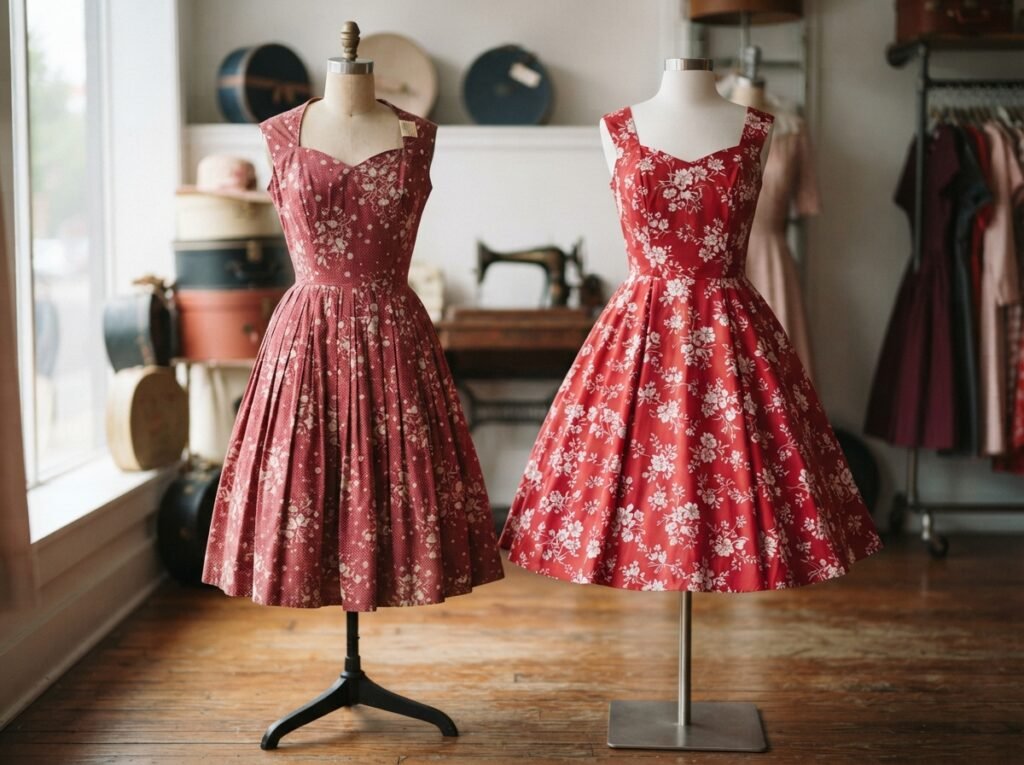
Quick Answer: A swing dress is defined as a dress with a fitted bodice, a defined waist, and a flared skirt that moves freely when you walk or dance. The style grew out of swing dance culture and became a 1950s fashion staple.
Where the name comes from
The dress takes its name from swing dancing. Lindy Hop, the dance behind much of that scene, grew out of Harlem ballrooms in the late 1920s and 1930s (Wikipedia, Lindy Hop). Dancers needed skirts that flared without tripping them up.
Why 1950s dresses changed everything
Wartime fabric rules pushed hemlines and skirts smaller. In the US, the War Production Board’s L-85 order limited how much fabric garments could use (National Archives, 1942). Then Christian Dior’s 1947 “New Look” brought back nipped waists and very full skirts (Dior, official history).
The contrast is easy to see:
| Era | Skirt Width | Waist | Fabric Use | Typical Feel |
|---|---|---|---|---|
| Early 1940s | Narrow to A-line | Natural | Restricted by wartime rules | Practical |
| Late 1940s | Widening fast | Nipped | Increasing | Romantic |
| 1950s | Very full, often with petticoat | Defined | Generous | Feminine, playful |
| 2026 reproduction | Full, moderately structured | Defined | Modern stretch blends | Wearable daily |
| Modern casual | Softer flare | Relaxed | Jersey, ponte | Everyday |
Before and after: A 1943 wartime dress skimmed the body with a slim skirt. A 1953 swing dress used yards more fabric to build a skirt that flared from a small waist. Same decade neighbors, completely different attitude.
Why 50s swing dress styles are trending again
Well, more precisely, they never fully left. Retro fashion cycles back, and a 50s swing dress is one of the easiest ways to wear the look without a costume feel. Wearing one with a denim jacket is a good start.
Pro Tip: Test the twirl before you buy. Stand in front of a mirror and spin once. If the skirt lifts and settles smoothly, the cut is doing its job. If it clings or twists, skip it.
Swing Dress Silhouettes: Circle vs Full Skirt
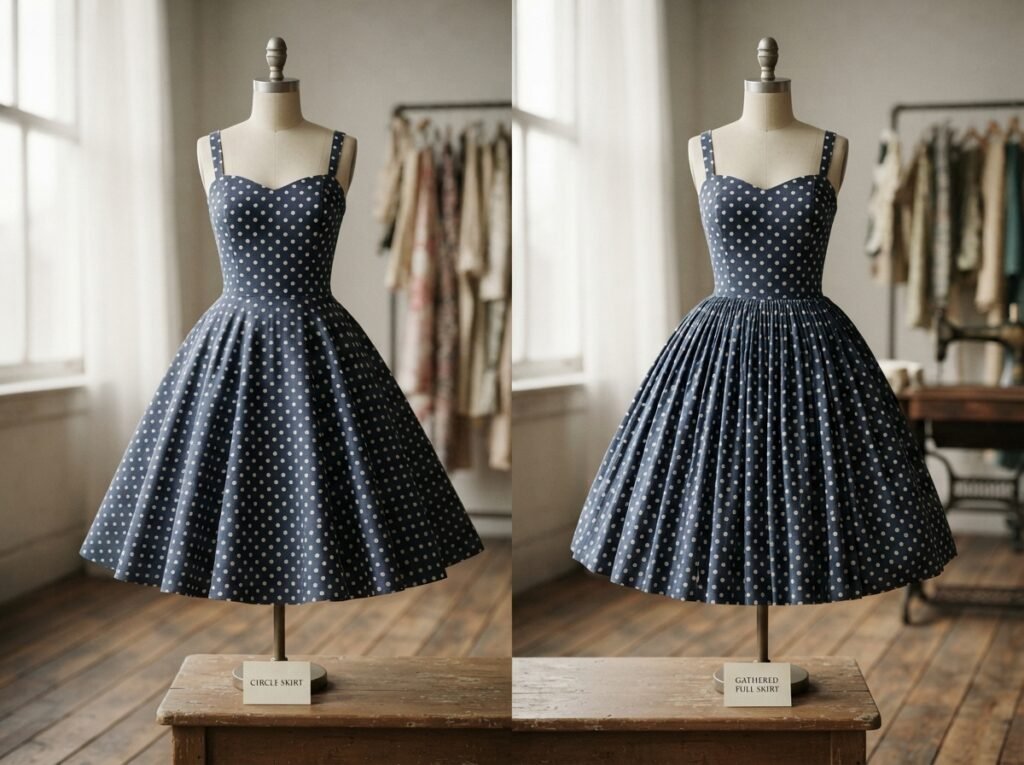
Quick Answer: A circle skirt dress is cut as a full or half circle, giving the widest and smoothest flare. A full skirt dress is usually gathered or pleated, giving volume with more texture.
Circle skirt dress explained
A circle skirt dress is cut so the skirt fabric forms a circle around the waist. It flares evenly, drapes cleanly, and looks dramatic when you turn. It also uses a lot of fabric, so it can feel heavy in stiff materials.
Full skirt dress explained
A full skirt dress gets its volume from gathers or pleats. It’s a bit more forgiving to sew and often lighter. The volume sits at the waist, which can add bulk if the fabric is thick.
Rockabilly dress crossover
A rockabilly dress often uses these same silhouettes, then adds bolder prints like cherries, polka dots, or leopard. Rockabilly grew from 1950s American music culture (Wikipedia, Rockabilly). So the dress and the music share a decade, but not every swing dress is rockabilly.
| Silhouette | Skirt Construction | Volume | Best Fabric | Best For |
|---|---|---|---|---|
| Full circle | Cut in a full circle | Very high | Light cotton, crepe | Dancing, statement looks |
| Half circle | Cut in a half circle | Medium high | Cotton sateen, ponte | Everyday wear |
| Gathered full skirt | Gathers at waist | High | Cotton poplin | Casual, day events |
| Pleated full skirt | Knife or box pleats | Medium | Crepe, twill | Office, dinner |
| A-line swing | Slight flare only | Low | Jersey, knit | Travel, comfort |
The Swing Dress Match Matrix (original framework)
I use a simple method for choosing between styles. Score each on three points, from 1 to 5:
- Movement: Will you dance, walk far, or sit most of the day?
- Occasion: Casual, work, or evening?
- Volume comfort: How much skirt do you actually like wearing?
Add the scores. High movement and high volume comfort point to a circle skirt. Low scores point to an A-line swing.
How to use the matrix:
- Write down your three scores.
- Match your total to the table above.
- Try two styles from that row.
- Keep the one that feels easiest on day one.
Best Swing Dresses for Women in 2026
Quick Answer: The best swing dresses for women combine a structured bodice, a fabric with slight stretch, and a hem that hits between mid-calf and just below the knee.
What to look for in a retro swing dress
A retro swing dress should have three things: darts or seaming in the bodice, a proper waist seam, and a skirt that holds its own shape. These details cost more to produce, which is why cheaper versions often look flat.
Fabric choices that matter
Cotton sateen holds shape. Crepe drapes. Jersey travels well but doesn’t flare as much. Stretch cotton blends are a solid middle ground.
Here’s a quick decision guide:
| Fabric | Structure | Comfort | Wrinkle Level | Best Season |
|---|---|---|---|---|
| Cotton sateen | High | Medium | Medium | Spring, fall |
| Crepe | Medium | High | Low | Year round |
| Stretch cotton | Medium | High | Medium | Spring, summer |
| Jersey | Low | Very high | Low | Travel |
| Taffeta | Very high | Low | High | Formal |
How to check fit in five steps
- Measure your bust, waist, and hip at home.
- Compare them to the brand’s chart, not to your usual size.
- Check the bodice length against your torso.
- Sit down, raise your arms, and twist.
- Walk a few steps and spin once.
Pro Tip: If you’re between sizes, buy for your bust or shoulders and hem or take in the rest. Skirts are easy to alter. Bodices are not.
Plus Size Swing Dresses: Fit That Works
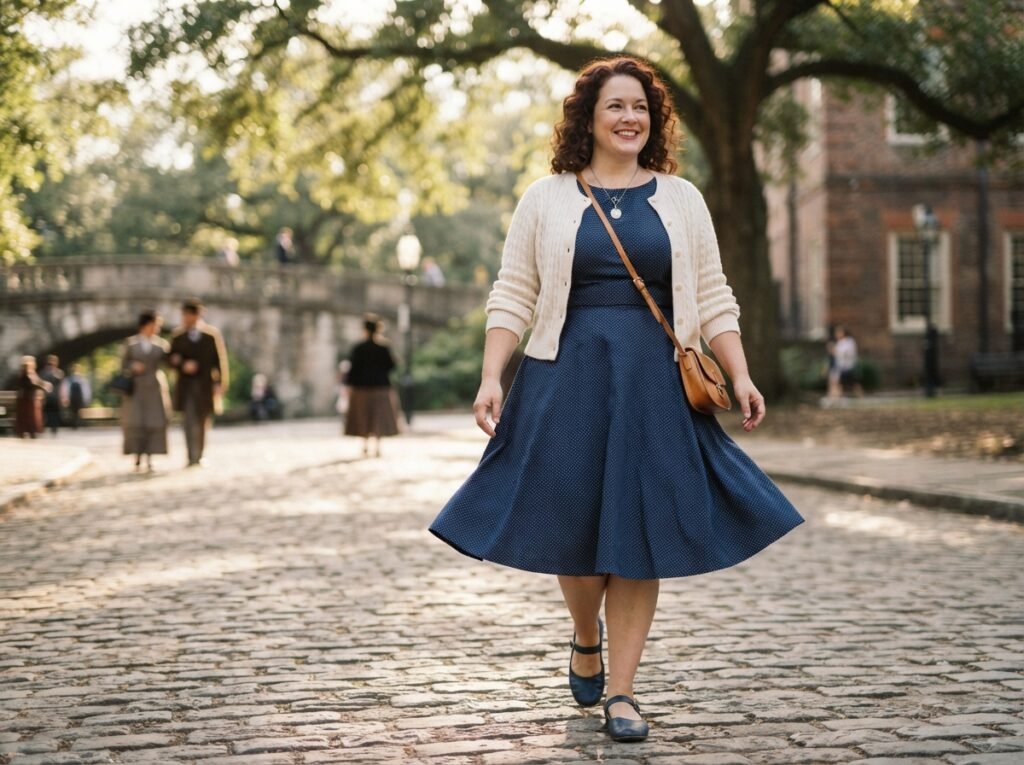
Quick Answer: Plus size swing dresses work best when the bodice has structure, the waist seam sits at your natural waist, and the skirt has enough flare to move without adding bulk.
Why this style suits many bodies
The waist seam defines shape without clinging. The skirt covers the hips and thighs while keeping movement. Given the average size stat above (Christel and Dunn, 2016), designing for fuller shapes isn’t niche. It’s the majority reality.
One honest limitation: very full skirts with heavy petticoats can add width. If that’s not the look you want, choose a half circle or A-line swing.
Plus size swing dresses: fit checklist
| Fit Point | What to Check | Common Problem | Quick Fix | Priority |
|---|---|---|---|---|
| Bust | Seams lie flat | Gaping or pulling | Try a wrap or sweetheart neckline | High |
| Waist | Seam at natural waist | Sitting too high | Choose a longer bodice | High |
| Arms | Comfortable movement | Tight sleeves | Pick cap or sleeveless | Medium |
| Hips | Skirt hangs freely | Skirt catching | Half circle cut | Medium |
| Length | Below knee or midi | Shortening when seated | Slightly longer hem | Low |
The Swing Dress Fit Triangle (original framework)
Think of fit as a triangle with three points: bodice, waist, skirt. Get the bodice right first, then the waist seam, then judge skirt volume. Most returns happen because people start with the skirt.
Try it in four steps:
- Check the bodice with arms raised.
- Confirm the waist seam sits where you want it.
- Spin and watch the skirt.
- Adjust the petticoat or remove it.
Pro Tip: Add a slip or cotton shorts underneath. It solves thigh friction and helps the skirt hang cleanly.
How to Style a 50’s Style Swing Dress
Quick Answer: A 50’s style swing dress works best with a small accessory set, a cropped layer to keep the waist visible, and shoes that match the mood: flats for day, heels for night.
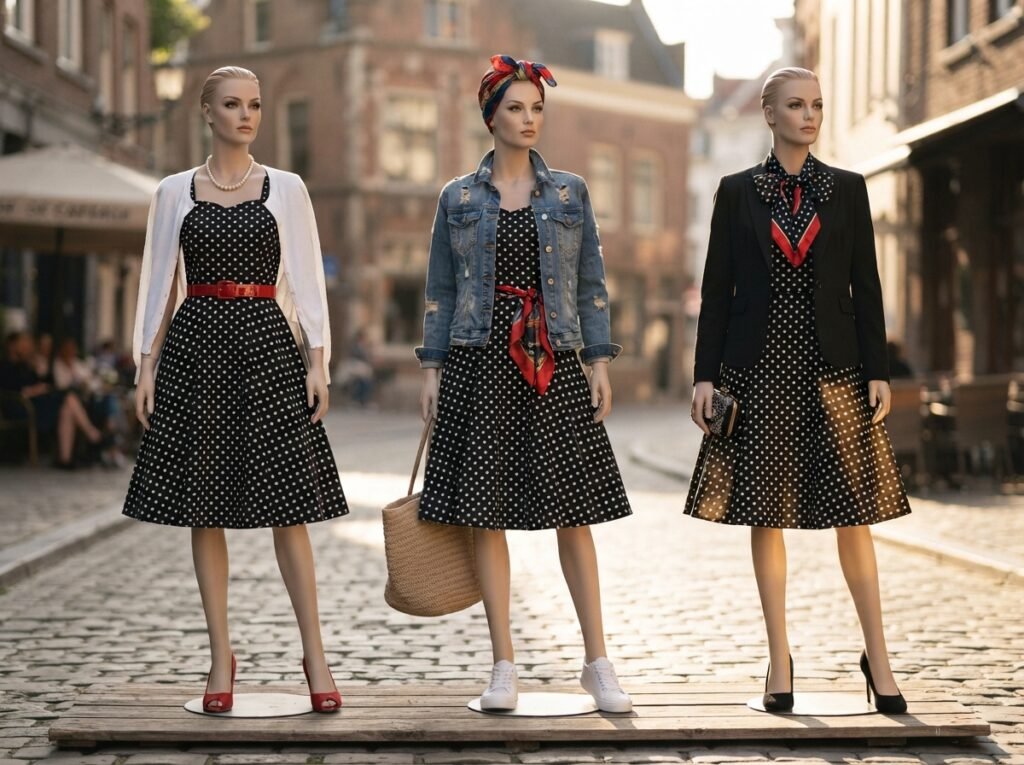
Three looks from one dress
The 50’s style swing dress is more flexible than it looks. Try these:
- Work: Cropped cardigan, low block heels, minimal jewelry.
- Dinner: Structured clutch, red lip, kitten heels.
- Weekend: Denim jacket, white sneakers, small crossbody.
Petticoats, shoes and accessories
A petticoat adds fullness. Skip it for everyday wear, use it for events. Look for one shorter than the dress hem so it never peeks out.
| Look | Layer | Shoes | Accessory | Vibe |
|---|---|---|---|---|
| Work | Cropped cardigan | Block heels | Small studs | Polished |
| Dinner | Shawl or bolero | Kitten heels | Clutch | Elegant |
| Weekend | Denim jacket | Sneakers | Crossbody | Relaxed |
| Dance night | None | Low heels | Hair scarf | Playful |
| Travel | Trench | Flats | Tote | Practical |
Build the outfit in five steps
- Choose one focal point (print or color).
- Add a layer that ends at the waist.
- Pick shoes for how much you’ll walk.
- Keep jewelry simple.
- Do a final mirror check with the hem.
Swing Dress Comparison: Top Options at a Glance
| Option | Key Feature | Best For | Price (approx., verify) | Rating |
|---|---|---|---|---|
| Unique Vintage | Reproduction 1950s cuts | Authentic retro look | $80 to $130 | [ADD] |
| Collectif | Strong tailoring | Structured fit | $70 to $120 | [ADD] |
| Hell Bunny | Bold prints | Rockabilly style | $60 to $100 | [ADD] |
| Eshakti | Custom sizing | Between sizes | $60 to $110 | [ADD] |
| Torrid | Extended sizes | Plus size swing dresses | $60 to $120 | [ADD] |
Our pick: For most first-time buyers, Eshakti’s custom sizing removes the biggest fit risk. If authentic 1950s cuts matter more, Unique Vintage is the safer choice.
FAQ
1. What is a swing dress? A swing dress has a fitted bodice and flared skirt. It was designed for movement, especially swing dancing. Modern versions often use stretch fabrics for comfort, and lengths range from knee to midi.
2. How does a swing dress differ from an A-line dress? A swing dress has a defined waist seam, while an A-line dress flows straight from the shoulders or chest. The waist seam creates the classic silhouette. A-line dresses are simpler and less structured.
3. Why do swing dresses need a petticoat? They don’t, but a petticoat adds volume. It supports the skirt shape and creates the 1950s look. For everyday wear, many people skip it and choose a half circle skirt.
4. Are swing dresses worth it? Yes, if you like structured, feminine clothing. A well-cut one works for many occasions and lasts years with basic care. Cheap versions may lose shape after a few washes.
5. What are the best swing dresses for women over 40? Choose a knee or midi length, sleeves if you prefer coverage, and a structured bodice. Fit matters more than age. Fabrics with slight stretch make it easier to wear all day.
6. How much does a good swing dress cost? Expect roughly $60 to $130 for quality reproduction brands as of 2026. Prices vary by sales and fabric. Check current listings before buying.
7. What’s the best way to tell if a swing dress will fit me? Compare your measurements to the brand’s size chart, not your usual size. Then check the bodice with your arms raised. If the bust or shoulders pull, go up a size and tailor the waist.
8. Swing dress vs rockabilly dress: which should I choose? Choose a swing dress for classic retro shapes and a rockabilly dress for bolder prints and attitude. Many pieces overlap, so pick based on print and mood.
9. Why does my swing dress skirt look flat? The fabric is probably too light or the cut has too little flare. Try a slip with structure, a petticoat, or a stiffer fabric like cotton sateen.
10. Can I wear a swing dress in winter? Yes. Add tights, boots and a fitted coat that ends at the waist. Wool blends and ponte fabrics work well.
Conclusion
A swing dress is easy to wear once you understand three things. The skirt cut decides the look. The bodice decides the fit. And your styling decides the mood. That’s the whole system.
Start with the Fit Triangle, pick a silhouette with the Match Matrix, and try one dress three ways before deciding it’s “too much.” Most people who try this keep the dress.
Next steps (10 minutes):
- Measure your bust, waist, and hips.
- Save two swing dress styles that match your Match Matrix score.
- Read our 1950s style dresses pillar -> /1950s-style-dresses] for the bigger picture.
About the Author
Ambreen Fayyaz writes about fashion and beauty for Zapy Beauty, focusing on vintage-inspired style and decade-specific fashion history for US readers. As a digital content strategist and website manager, she combines meticulous archival research with practical style guides. Contact: ambreenfayyaz14@.com.
References
- Christel, D. A., and Dunn, S. C. (2016). Average American women’s clothing size: Comparing National Health and Nutritional Examination Surveys (1988 to 2010) to ASTM International Misses and Women’s Plus Size clothing. International Journal of Fashion Design, Technology and Education, 10, 129 to 136.
- Christian Dior. The New Look (first collection, 12 February 1947).
- Wikipedia. Lindy Hop.
- Wikipedia. Rockabilly.
- US National Archives. World War II records on War Production Board Order L-85.