
Introduction
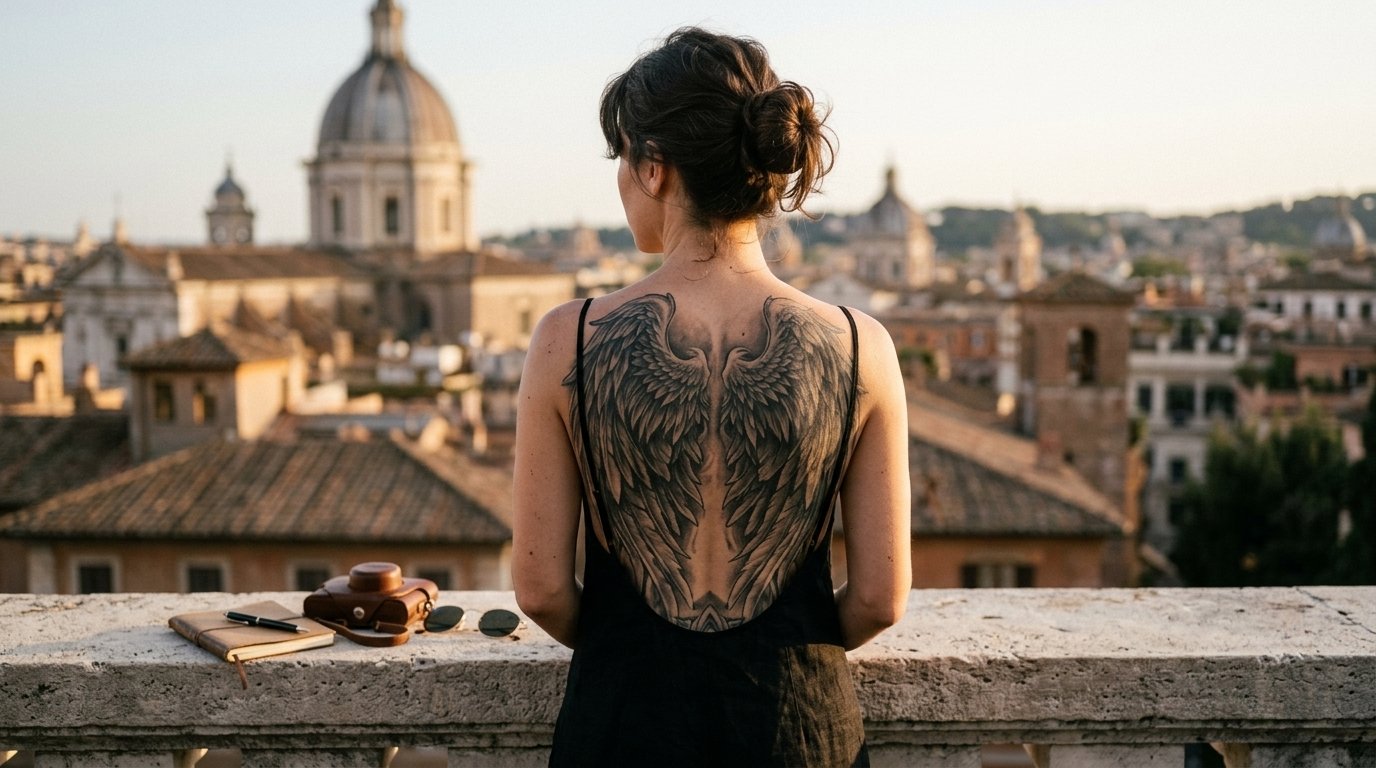
Nearly a third of American adults have at least one tattoo, and most of them didn’t get it on a whim. Sixty-nine percent say they got inked to honor or remember someone or something (Pew Research Center, 2023). Of every placement someone could pick to carry that kind of weight, the back keeps winning for one specific design: angel wings.
An angel wings tattoo on back placement isn’t just popular because it looks good in a mirror selfie. It’s the one spot on the body where the design makes anatomical sense. Wings belong on a back the way a crown belongs on a head. But “put wings on my back” still leaves a lot of decisions on the table: how big, how realistic, which side of the spine, and what it’s actually going to cost you in money and pain.
Key Takeaways
- The spine itself is one of the most painful tattoo zones on the body, but the muscle just beside it is not.
- Pricing depends far more on hours in the chair than on the design itself.
- Shoulder blade placement is the most forgiving first back piece for pain, symmetry, and budget.
- A full-back realistic design usually needs multiple sessions spread across months, not one sitting.
- You will basically never see this tattoo without a mirror, and that’s worth thinking through before you book.
Here’s the full breakdown, placement by placement, style by style, dollar by dollar.
Table of Contents
- What an Angel Wings Back Tattoo Really Symbolizes
- Angel Wings Tattoo Styles Trending in 2026
- Where to Place Angel Wings on Your Back
- Does an Angel Wings Back Tattoo Hurt?
- What a Back Wings Tattoo Costs in 2026
- How to Plan and Get Your Wings Tattoo
- Healing and Aftercare for a Back Piece
- FAQ
What an Angel Wings Back Tattoo Really Symbolizes
Angel wings tattoo is defined as a design depicting one or two feathered or stylized wings, inked so they appear to grow from the wearer’s own shoulders and spine, rather than as part of a full angel figure.
Quick answer: An angel wings tattoo on the back symbolizes protection, freedom, and remembrance, and the shoulder blades are the most requested spot because that’s anatomically where wings would attach. Two wings usually suggest balance. A single wing tends to point to loss or a personal turning point.
Protection, Freedom, and Remembrance
Across tattoo culture, three meanings show up over and over: guardianship (a protective presence watching over you), personal freedom (breaking away from something that was holding you back), and memorial tribute (honoring someone you lost). The wings themselves borrow from a much older visual language. Wings have shown up as symbols of transcendence and messengers between worlds for centuries, long before anyone was putting them under a tattoo needle.
That memorial angle isn’t a small footnote either. It’s the single most common reason Americans give for getting any tattoo at all, at 69% (Pew Research Center, 2023). Angel wings just happen to be one of the most literal ways to visualize that idea on skin.
Why the Shoulder Blades Specifically
Does placement change the meaning? A little, yes. Wings positioned directly over the shoulder blades read as the most “natural,” since that’s the spot where real wings would physically attach. Spine-line wings, running down the center rather than across the back, tend to read more as a personal or spiritual marker than a literal wing shape. Full-back wings that stretch shoulder to shoulder go for maximum visual impact and usually signal a bigger personal statement, not a subtle one.
Interestingly, one public art project made this exact placement famous outside of tattoo culture entirely. Artist Colette Miller’s Global Angel Wings Project, a series of interactive street murals that invite people to stand in front of painted wings for photos, has spread from Los Angeles to cities worldwide, reinforcing the same idea a tattoo does: the wings are yours, you just needed somewhere to put them.
One Wing vs. Two: Does It Change the Meaning
Yes, and this is one of the more overlooked decisions in the whole planning process. A single wing is frequently chosen to represent a specific hardship, a loss, or a “half” that’s still healing. A matched pair leans toward balance, wholeness, and completion. Neither is more “correct.” It just changes what the tattoo is quietly saying.
Angel Wings Tattoo Styles Trending in 2026
Quick answer: A medium shoulder blade wings design typically runs $500 to $2,500 in 2026, while a full-back realistic piece can run $2,500 to $6,000 or more. Your final number depends more on hours in the chair than on the design itself.
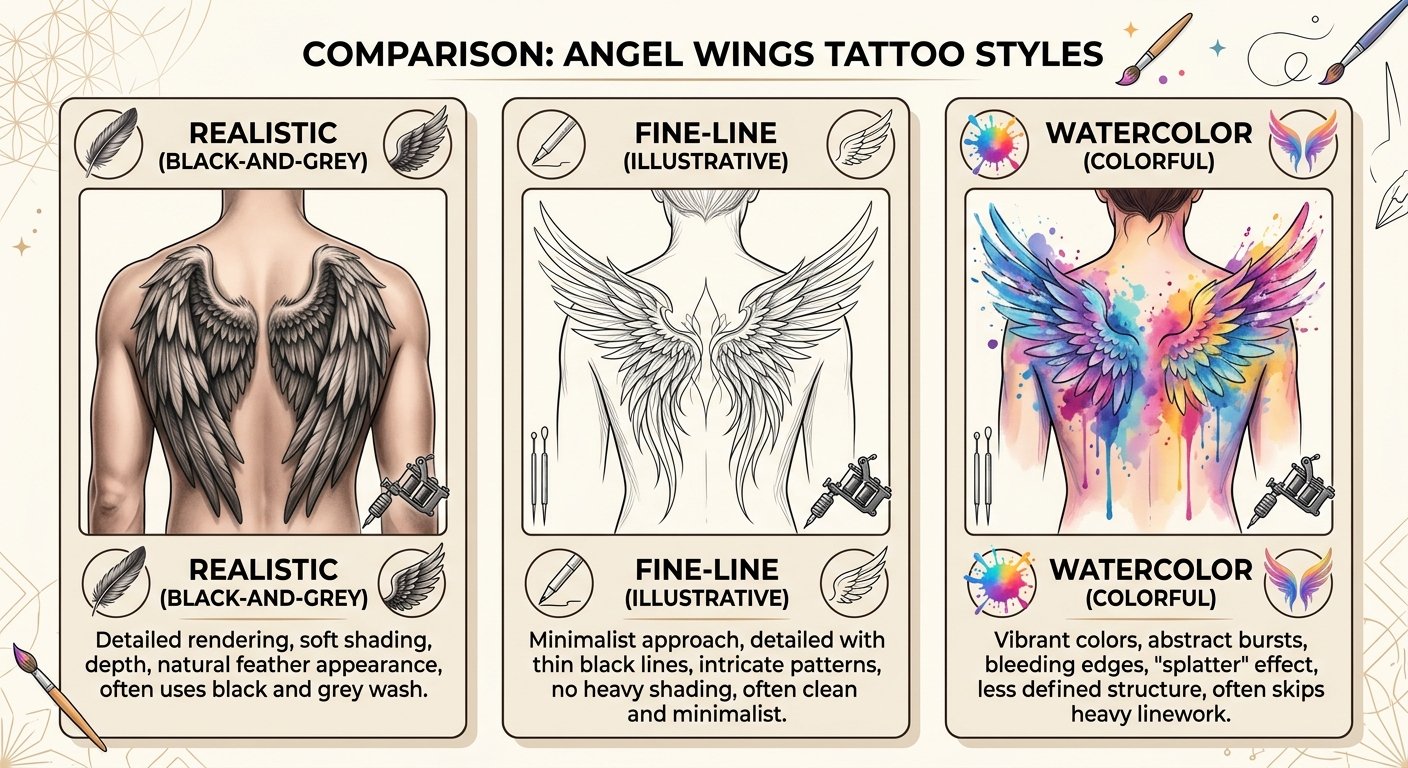
Style is where most people start browsing and where most people get stuck, mainly because “angel wings” covers a much wider range than the Pinterest boards suggest. Here’s what’s actually trending.
Realistic Feathered Wings
Realistic wings aim for anatomically accurate feather layering, individual barb detail, and shading that mimics real light on real feathers. This is the most detailed, most time-intensive, and most expensive style on this list, and it’s also the one that photographs best for a full-back statement piece.
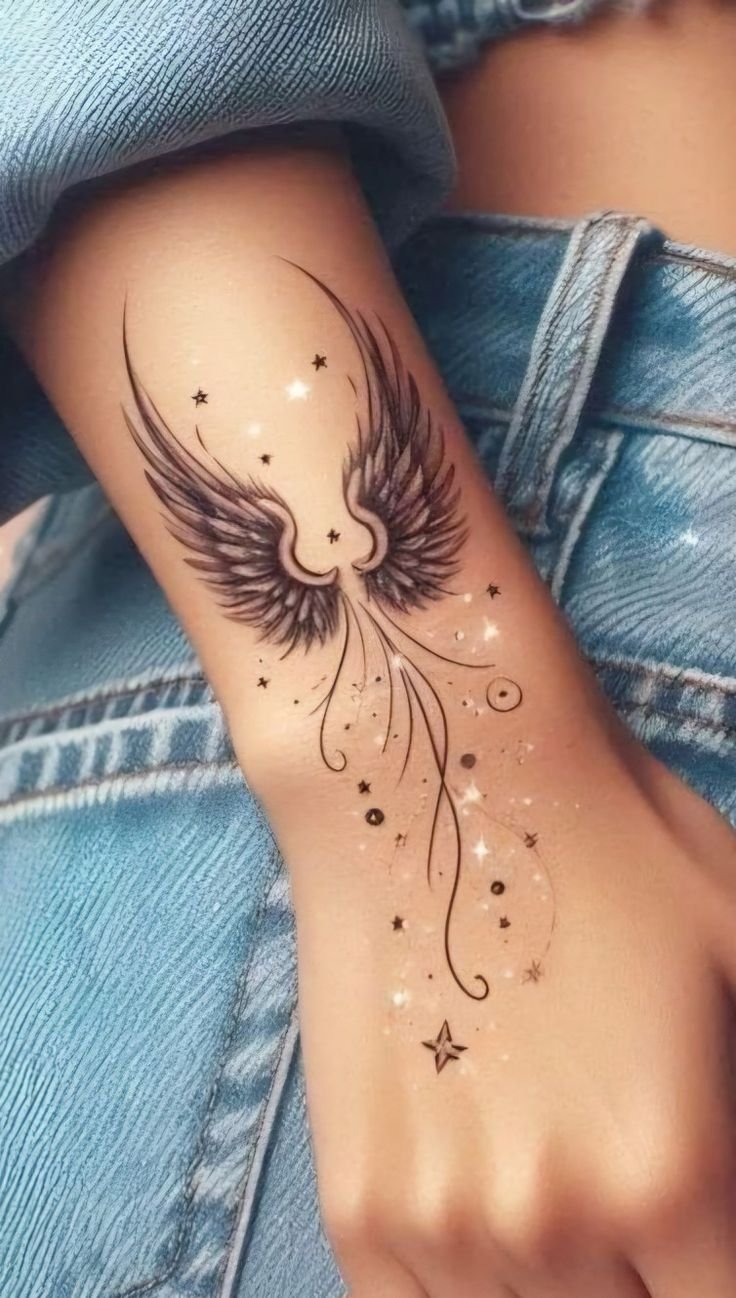
Fine-Line and Minimalist Wings
Fine-line tattoos use thin, single-needle outlines with little to no shading. For angel wings, this means a clean silhouette rather than individually rendered feathers. It’s the fastest style to complete, the easiest to keep symmetrical, and generally the least painful simply because the artist spends less total time on the skin.
Watercolor and Colored Wings
Watercolor tattoos blend color with soft, bleeding edges instead of hard outlines, giving wings a painterly, almost airbrushed look. This style ages differently than black and grey work. Color fades faster under UV exposure, so it needs more sun protection and more touch-ups over the years to stay vibrant.
Tribal, Geometric, and Gothic Variations
Bolder interpretations swap realism for pattern. Tribal versions lean on thick black linework and abstract shapes. Geometric wings build the shape from triangles or dot-work. Gothic wings go sharper and darker, sometimes paired with a broken feather or a fallen-angel theme for a completely different emotional tone than the classic protective version.
Angel Wings Tattoo on Back Comparison: Top Options at a Glance
| Style | Key Feature | Best For | Avg. Price Range (USD) | Editorial Popularity |
|---|---|---|---|---|
| Full-Back Realistic Wings | Lifelike feather layering across the whole back | Bold statement pieces, higher pain tolerance | $2,500 to $6,000+ | ★★★★★ |
| Shoulder Blade Wings (Medium) | Symmetrical wings anchored between the blades | First back piece, moderate budget | $500 to $2,500 | ★★★★☆ |
| Spine-Line Minimalist Wings | Slim linework tracing either side of the spine | Subtle symbolism, smaller budget | $300 to $900 | ★★★☆☆ |
| Watercolor Angel Wings | Soft color blending, painterly edges | Artistic, feminine aesthetic | $600 to $1,800 | ★★★☆☆ |
| Fine-Line Detailed Wings | Delicate single-needle linework | Low maintenance, understated look | $400 to $1,200 | ★★★★☆ |
| Blackwork or Bold-Line Wings | Heavy black fill, high contrast | Long-term fade resistance | $500 to $2,000 | ★★★☆☆ |
Our pick: For most first-timers weighing this decision, shoulder blade wings hit the sweet spot. You get enough visual impact to feel like a genuine back piece, without the multi-session, four-figure-and-up commitment of a full-back design or the added pain of tattooing directly over the spine.
Pro Tip: Bring your artist reference photos of actual bird feathers, not just other people’s finished angel wing tattoos. Working from real feather anatomy instead of someone else’s interpretation of someone else’s interpretation is how you end up with a design that looks like yours instead of a copy of a copy.
Where to Place Angel Wings on Your Back
Placement decides almost everything else on this list: the pain, the price, the healing time, and how visible the finished piece is day to day.
Full Back / Large Angel Wings
This is the maximum-impact option, spanning from shoulder to shoulder and often down to the lower back. It gives an artist the most room for detail and shading, but it also means the longest total time in the chair and the highest total cost.
Upper Back and Shoulder Blade Wings
The most requested version, and for good reason. This placement sits on thicker, more muscled skin, keeps sessions shorter, and still delivers a clear “wings” silhouette without covering the entire back.
Angel Wing Spine Tattoo
A spine-focused design runs vertically along the centerline, sometimes as the wing shafts themselves, sometimes as a slim accent between two wing shapes set off to either side. Direct spine placement is where the real anatomical tradeoff shows up, and we’ll get into exactly why in the next section.
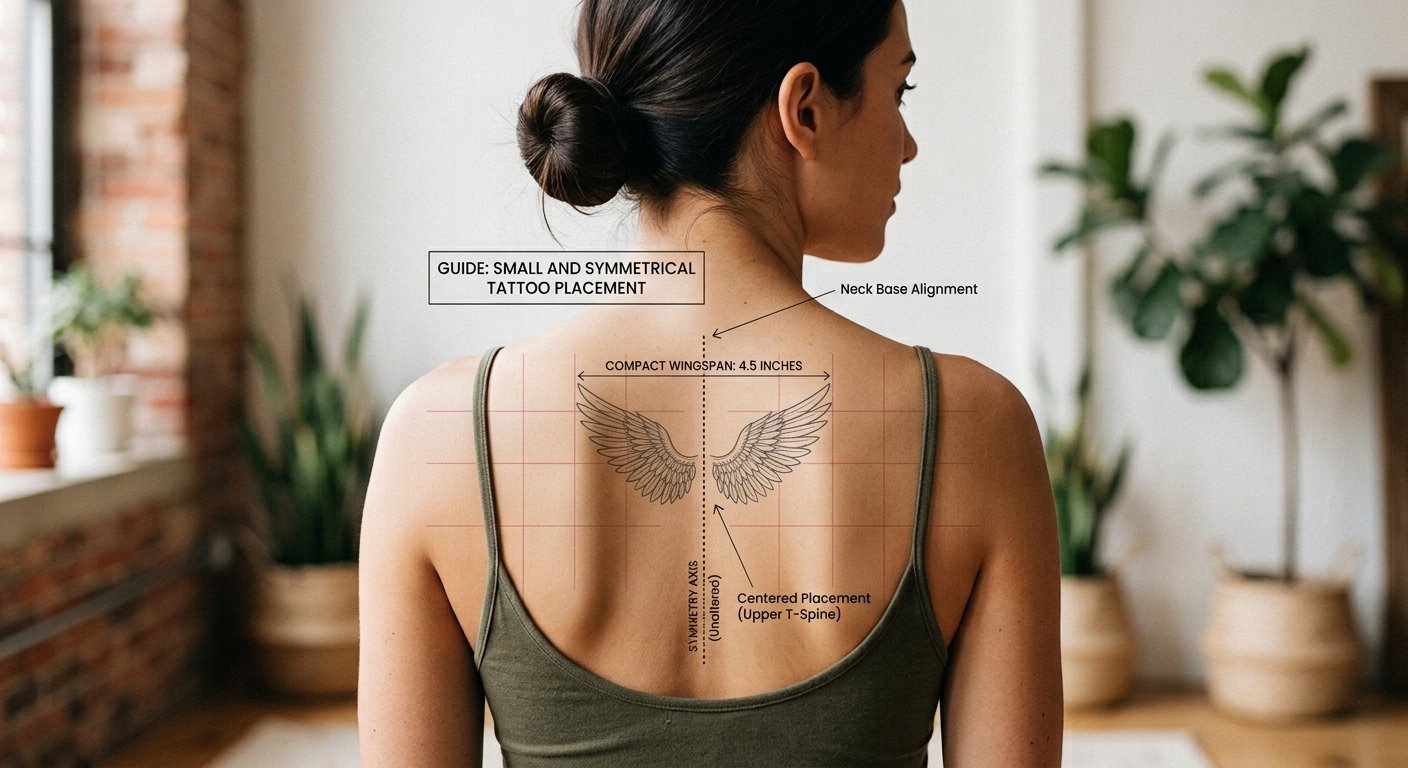
Small and Symmetrical Placements
Not every angel wings tattoo needs to be dramatic. Small, symmetrical wing outlines positioned just below the neck or centered between the shoulder blades work well as a first tattoo or as an addition to an existing back piece.
Editorial Observation: Looking across the long-tail search patterns for this exact topic (large back wing designs, spine-specific wing tattoos, and shoulder blade wing placements), searchers consistently already have a placement zone in mind before they’ve picked a style. That’s a useful signal: most people researching this topic aren’t asking “should I get wings,” they’re asking “where exactly do these go on me.” The content and internal linking here should answer the placement question first, style second.
The Wingspan Fit Method
Here’s a simple three-factor framework for narrowing down placement before you ever sit in a chair.
- Frame. How much of your back are you actually willing to dedicate? Full canvas, half, or a smaller accent piece?
- Tolerance. What’s your realistic pain and session-count budget? Be honest about how many multi-hour sessions you’ll actually show up for.
- Coverage. How often is your back exposed in daily life? Swimsuits, backless dresses, and workwear all change how much you want this to be easy to hide versus easy to show.
Run your idea through those three filters and the “right” placement usually becomes obvious pretty fast.
Pro Tip: During your consultation, lean forward and roll your shoulders the way you would in real life, not just stand flat against a wall. Wings that look perfectly symmetrical on a still reference photo can shift and stretch oddly once your shoulder blades actually move, and it’s much easier to catch that at the stencil stage than after the ink is in.
One tradeoff worth naming plainly: you will basically never see this tattoo without a mirror or a photo. If part of the appeal of a tattoo is glancing down and seeing it, a back piece is the wrong canvas. If the appeal is how it feels and how it looks to everyone else, it’s exactly right.
Does an Angel Wings Back Tattoo Hurt?
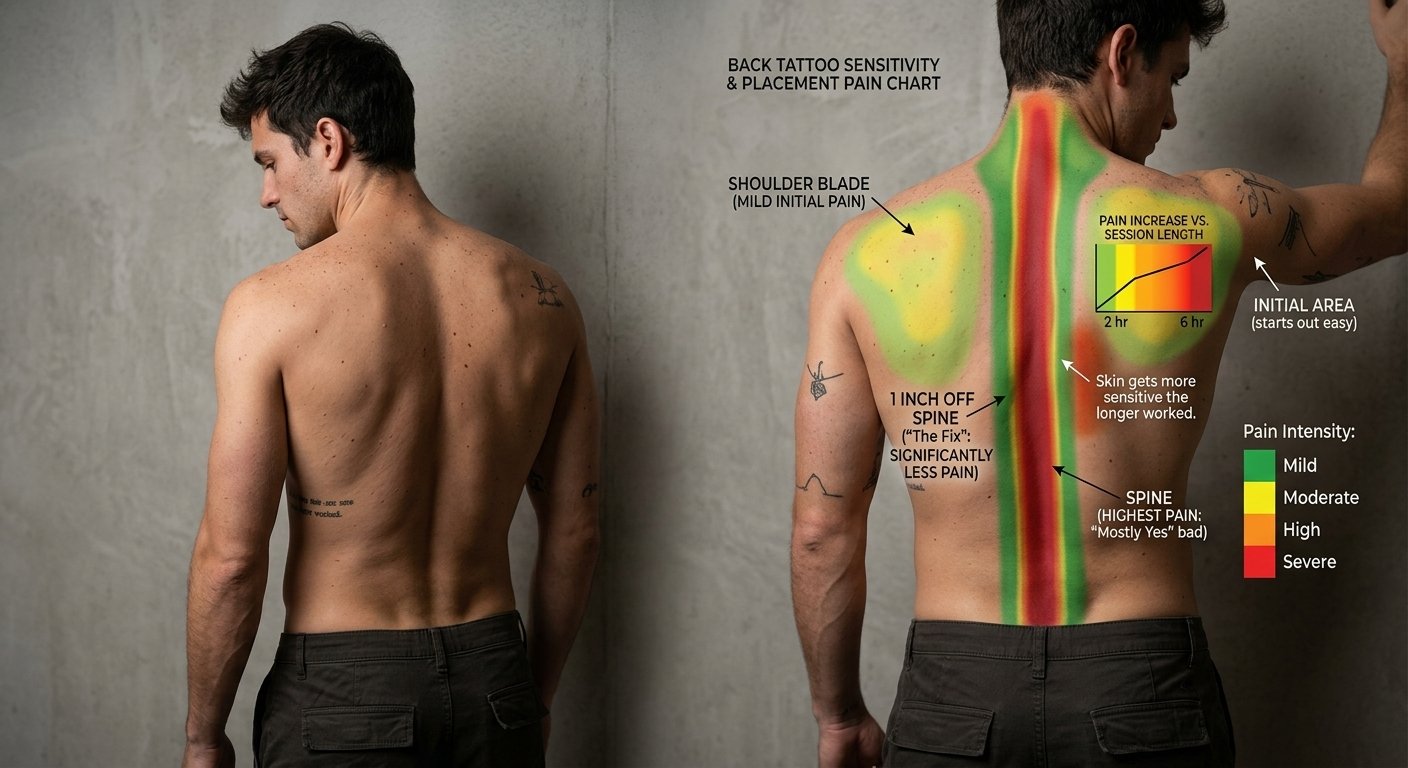
Quick answer: Tattoo pain charts consistently rank the spine itself among the most painful spots on the body, commonly cited around 8 to 10 out of 10, while the flatter, muscled area just an inch to either side sits much lower, closer to 3 to 5 out of 10. Placing your design just off the spine, not directly on it, is the easiest way to lower the pain without changing the design.
Why the Spine Is the Hot Zone
Spine tattoo pain refers to the sharper, more intense sensation felt when a needle works directly over the vertebrae, where skin sits thin against bone with almost no muscle in between to absorb the vibration. Direct spine placement increases pain because there’s minimal padding between the needle and bone. Shoulder blade placement reduces pain compared to direct spine work because of thicker surrounding muscle. That’s not a personal opinion, it’s the same pattern reported across pain guides from tattoo studios and aftercare brands alike (Saniderm, 2023).
Shoulder Blades vs. Flat Back Muscle
Shoulder blades themselves land in the middle. There’s bone close to the surface, so it’s more sensitive than the broad muscle of the upper back, but it’s still nowhere near as sharp as the spine itself. The flattest, most muscled parts of the upper and outer back are, honestly, one of the more forgiving zones on the entire body for a first-timer worried about pain.
How Session Length Changes the Pain
Here’s the part most guides skip: it’s not just where, it’s how long. A two-hour session on the shoulder blade rarely becomes unbearable. A six-hour session on the same spot, on the other hand, gets harder in the final stretch simply because the skin gets more sensitive the longer it’s worked, regardless of how “easy” the placement started out.
Pro Tip: Eat a real meal and drink water in the hours before a long back session. Low blood sugar doesn’t just make pain feel worse, it’s also the most common reason people start feeling lightheaded halfway through a multi-hour sitting.
Is a spine tattoo really as bad as people say? Mostly yes, though pain tolerance is genuinely personal, and some people describe it as a sharp, vibrating sensation rather than unbearable agony. But if pain is your main hesitation about this whole idea, the fix isn’t skipping the tattoo. It’s just moving the design an inch to either side of the centerline.
What a Back Wings Tattoo Costs in 2026
Quick answer: A medium shoulder blade design typically runs $500 to $2,500 in 2026. A full-back realistic piece commonly runs $2,500 to $6,000, with highly detailed color work from in-demand artists sometimes pushing past $8,000. The design itself matters less than the hours it takes to complete.
Pricing by Size and Detail
Small, minimalist spine-line wings often land close to a shop’s minimum fee, somewhere around $300 to $900 total. Medium shoulder blade pieces with moderate shading typically run $500 to $2,500. Large or full-back realistic designs, the kind that need multiple sessions and real anatomical feather detail, regularly land between $2,500 and $6,000, and elaborate color work from a sought-after artist can exceed that.
Hourly vs. Flat-Rate vs. Day-Rate
Most artists in 2026 charge $100 to $300 an hour for custom work, with well-established specialists charging $300 to $500 or more. Smaller, simpler wing designs are often priced flat, since the artist already knows roughly how long the piece will take. Larger, custom back pieces are almost always priced hourly or by the session, because the time commitment is too unpredictable to quote as a flat number up front.
Real Example: Budgeting a Full-Back Piece
Picture a fairly typical case. A first-time back-piece client wants medium-sized wings spanning both shoulder blades, black and grey, with moderate feather detail, no full-back extension. At a $175 hourly rate, three sessions of about three hours each (design refinement and touch-ups included) land the total around $1,575, not counting a deposit or tip. That’s a realistic mid-range budget for this exact style. It’s not the bargain-bin flash-tattoo price, and it’s nowhere near the multi-thousand-dollar full-back commitment.
Pro Tip: Ask your artist upfront whether their hourly rate includes setup, stencil placement, and breaks, or only actual needle time. A “three-hour tattoo” that turns into four hours in the chair is one of the most common surprises first-timers run into.
How to Plan and Get Your Wings Tattoo
Once you’ve settled on style, placement, and rough budget, the actual process is fairly predictable. Here’s the realistic order of operations.
- Research and shortlist three to five artists who specialize in wings, feather texture, or large-scale back work specifically, not just tattooing in general.
- Book consultations and bring real reference photos, including actual feather anatomy, not only other people’s finished tattoos.
- Agree on size, placement, and a stencil fitting before any ink touches your skin. This is your last easy chance to change anything.
- Confirm the pricing model in writing, whether it’s hourly, flat, or day-rate, along with an estimated session count.
- Prep your body the week of your session. Sleep well, eat properly, stay hydrated, and skip alcohol and blood thinners beforehand.
- Sit for the session or sessions, with planned breaks built in for anything longer than two or three hours.
- Follow your aftercare instructions exactly for the first several weeks, which we’ll walk through next.
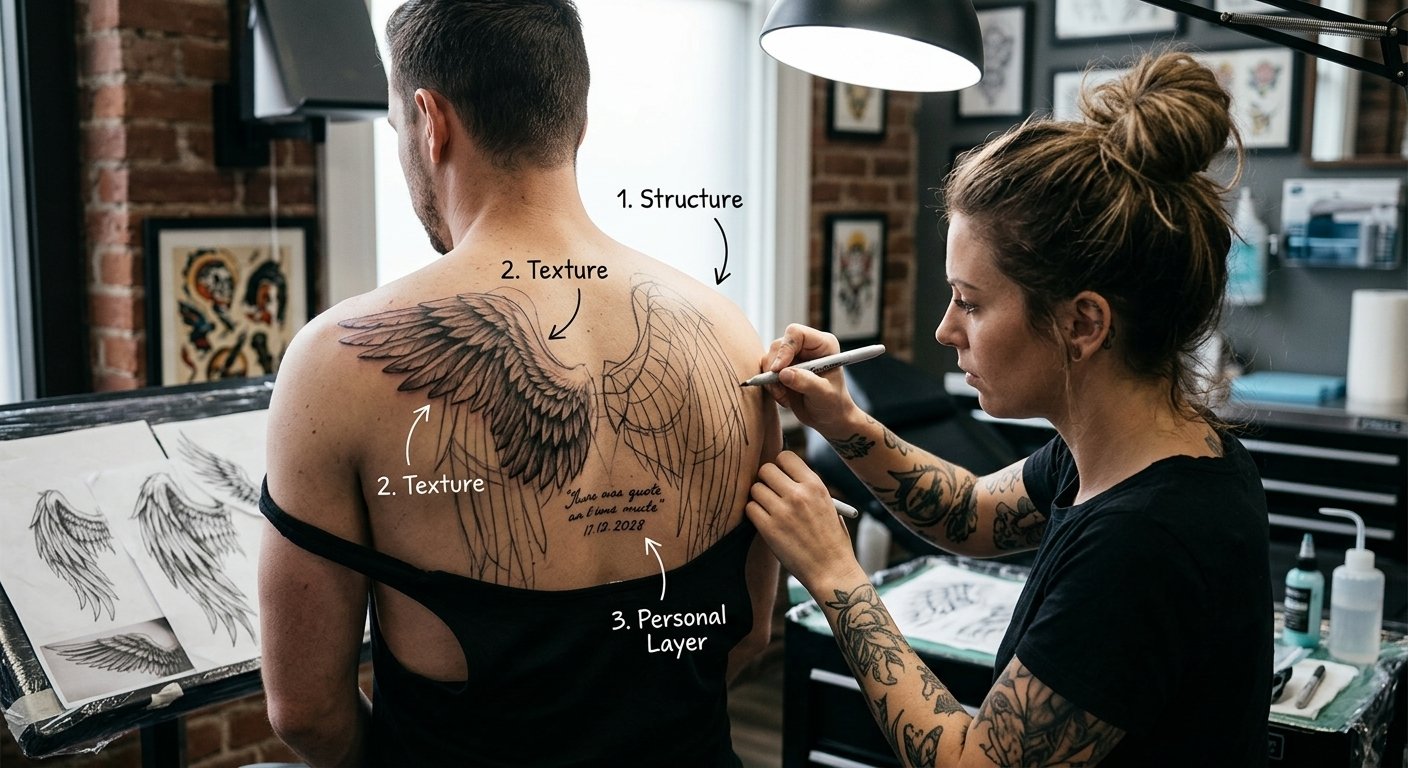
The 3-Layer Wing Design Formula
When you’re actually sketching out the design with your artist, it helps to think in three separate layers instead of one finished image.
- Structure. The basic wing shape and overall size. This is the skeleton everything else hangs on.
- Texture. How much individual feather detail and shading you want, from fully realistic to a simplified silhouette.
- Personal layer. Any name, date, quote, or small symbol woven into the design, which is usually what turns a generic wing tattoo into a specific, personal one.
Working through those three layers in order, instead of trying to design everything at once, tends to produce a cleaner final piece.
Healing and Aftercare for a Back Piece
The Realistic Healing Timeline
Surface healing for most tattoos takes about two to three weeks, but full healing, meaning the deeper layers of skin, can take several months, especially for larger pieces (Cleveland Clinic, 2026). A full-back wings tattoo, being both large and on a hard-to-reach area, tends to sit at the slower end of that range.
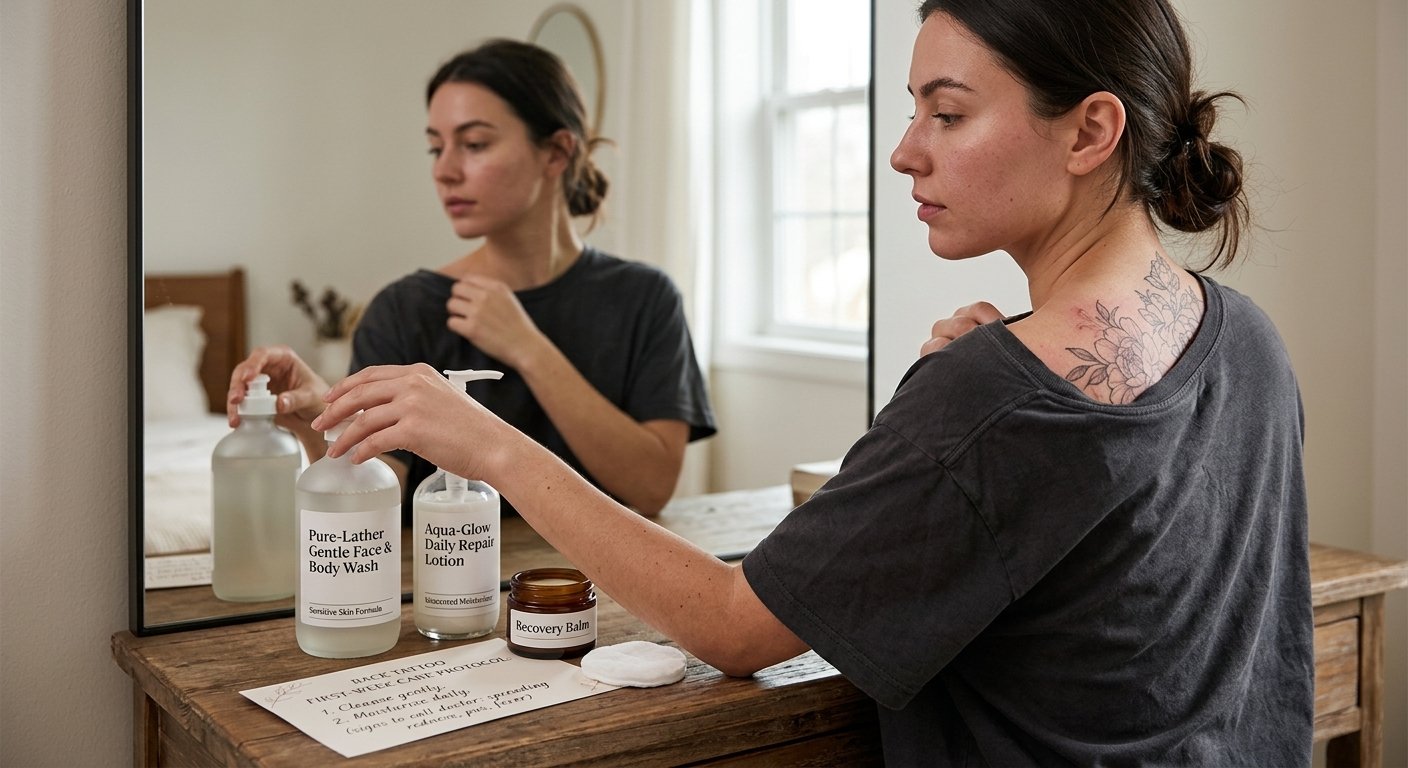
During healing, dermatologists recommend washing the area gently with mild, fragrance-free soap twice a day, patting it dry rather than rubbing, and moisturizing regularly, while avoiding direct sun, tight clothing, petroleum-based products, and swimming or soaking until it’s fully healed (Cleveland Clinic, 2026).
Back-Specific Aftercare Problems and Fixes
This is where a back piece genuinely differs from an arm or leg tattoo, and it’s the part most generic aftercare guides never mention.
You can’t easily see or reach it yourself. Ask a friend or partner to help check for redness, swelling, or anything that looks off during the first two weeks, since you physically cannot get a clear view of your own upper back.
Bra straps and backpack straps sit right on top of fresh ink. Switch to strapless or racerback options, and skip the backpack, for at least the first week or two.
Seatbelts and car seats create constant low-level friction. If you’re driving right after your session, a loose t-shirt between your back and the seat helps more than people expect.
Sleeping on your back puts direct pressure on healing skin. Side or stomach sleeping, even if it’s not your usual position, makes a real difference in the first week.
Signs You Should Call a Professional
Some redness, swelling, and itching is completely normal. Spreading redness, pus, a fever, or pain that gets worse after the third day instead of better is not, and it’s worth contacting your artist or a doctor promptly if you notice any of those (Cleveland Clinic, 2026).
Pro Tip: Buy a loose, dark-colored cotton shirt specifically for the first week of healing. Dark fabric hides any ink or ointment transfer, and loose cotton is the single easiest way to avoid the strap-and-friction problems above.
Frequently Asked Questions
What is an angel wings tattoo on the back?
An angel wings tattoo on the back is a design showing one or two feathered or stylized wings, placed across, below, or alongside the shoulder blades and spine so they appear to belong to the wearer. It’s one of the most requested tattoo concepts in the fashion and beauty space precisely because the placement matches the imagery so directly. Styles range from full realistic feather detail to minimalist single-line outlines.
How does an artist design an angel wings tattoo to fit your back?
An artist maps the design to your specific spine length, shoulder width, and posture during a stencil fitting before any tattooing begins. They’ll typically photograph the stencil from directly behind you while you stand naturally, then again while you move, to make sure the wings read correctly whether you’re standing still or reaching for something.
Why do so many people choose the back specifically for angel wings?
The back is where wings would anatomically attach if they were real, which is a big part of the visual appeal. It also offers the largest flat canvas on the body for detailed work, and it’s easy to keep private under clothing or reveal in a backless outfit, depending on what you want.
Is a large angel wings back tattoo worth the pain and cost?
For most people, yes, especially if the design avoids running directly over the spine. The pain on the muscled parts of the back is genuinely manageable for most people, the piece tends to age well thanks to the back’s thicker skin, and the visual payoff for a full-back design is hard to match with a smaller placement.
What are the best angel wings tattoo styles for a first-timer?
Fine-line or shoulder blade wings in black and grey are the most forgiving starting point. They need fewer sessions, cost less than a full-back realistic piece, and are noticeably easier for an artist to keep symmetrical than a highly detailed large-scale design.
How much does an angel wings tattoo on the back cost in 2026?
A medium shoulder blade design typically runs 500 to 2,500 dollars in 2026. A full-back realistic piece commonly runs 2,500 to 6,000 dollars or more across multiple sessions, and elaborate color work from an in-demand artist can push past that.
How does an angel wings back tattoo compare to a chest or arm placement?
The back offers more usable space and generally less bone-related pain than the ribs or chest, though it heals more slowly since it’s hard to reach and easy to accidentally irritate. Unlike an arm tattoo, you’ll also never see a back piece directly without a mirror or photo, which changes how some people feel about it day to day.
My angel wings tattoo healed unevenly on one side. What should I do?
Minor differences during the first few weeks are usually just swelling, scabbing, or normal variation, and they typically even out on their own. If one side is still noticeably different after 6 to 8 weeks, go back to your original artist, most offer a free touch-up within a set window, rather than booking with someone new.
What’s the best way to prepare for a full-back angel wings tattoo session?
Sleep well the night before, eat a full meal within a few hours of your appointment, and stay hydrated. Skip alcohol and blood thinners beforehand, since both increase bleeding and can affect how the ink settles, and wear loose clothing that’s easy to remove without pressing on your back afterward.
What’s the best way to keep angel wings tattoo linework symmetrical on the back?
Ask your artist to use the spine as a fixed center guideline and to photograph the stencil from directly behind you while you’re standing naturally, not hunched or twisted. Symmetry has to be planned and checked at the stencil stage. Once the tattoo is actually done, there’s very little room to correct it.
Conclusion
An angel wings tattoo on back placement earns its popularity honestly. It’s one of the only designs where the meaning and the anatomy line up perfectly. But the real decision isn’t “should I get wings,” it’s three smaller ones: which style fits your pain tolerance and budget, which exact placement keeps you off the most sensitive part of your spine, and whether you’re genuinely comfortable with a piece you’ll never see without a mirror.
Get those three right, and everything else, the healing, the touch-ups, the years of wearing it, tends to fall into place.
Next steps you can do in the next 10 minutes:
- Screenshot the comparison table above and circle the style and price range that actually fits your budget.
- Save two or three reference photos of real feathers, not just other people’s tattoos, to bring to a consultation.
- Message one local artist who specializes in back pieces to ask about their hourly rate and earliest consultation slot.
About the Author
Written by a beauty and body-art content specialist who has spent years covering tattoo trends, aftercare science, and placement guides for fashion and lifestyle audiences. Research for this piece draws on published pain-scale and aftercare data from practicing tattoo studios, cited below. Not a medical professional; always consult a licensed tattoo artist and, where relevant, a dermatologist before booking.
Last Updated: August 22, 2026 Disclosure: This article contains no sponsored placements or affiliate links. Fact-checked by: Editorial review team
References
- Pew Research Center. “32% of Americans have a tattoo, including 22% who have more than one.” 2023.
- YouGov. “Americans have become more favorable toward tattoos in the past decade.” 2025.
- Ipsos. “More Americans Have Tattoos Today than Seven Years Ago.” 2019.
- Ipsos, via Statista. “Americans who regretted getting a tattoo, by generation.” 2021.
- Cleveland Clinic. “Tattoo Aftercare: Instructions and Healing Tips,” reviewed by Shilpi Khetarpal, MD. 2026.
- Apprentice. “How Much Does a Back Tattoo Cost? Pricing Guide.” 2026.
- Saniderm. “How Much Does a Tattoo Hurt? Tattoo Pain Chart.” 2023.
Pingback: Angel Wings Tattoo Meaning: The Ultimate 2026 Guide